University Partnerships for Development: What Decades of Cross-Border Collaboration Built
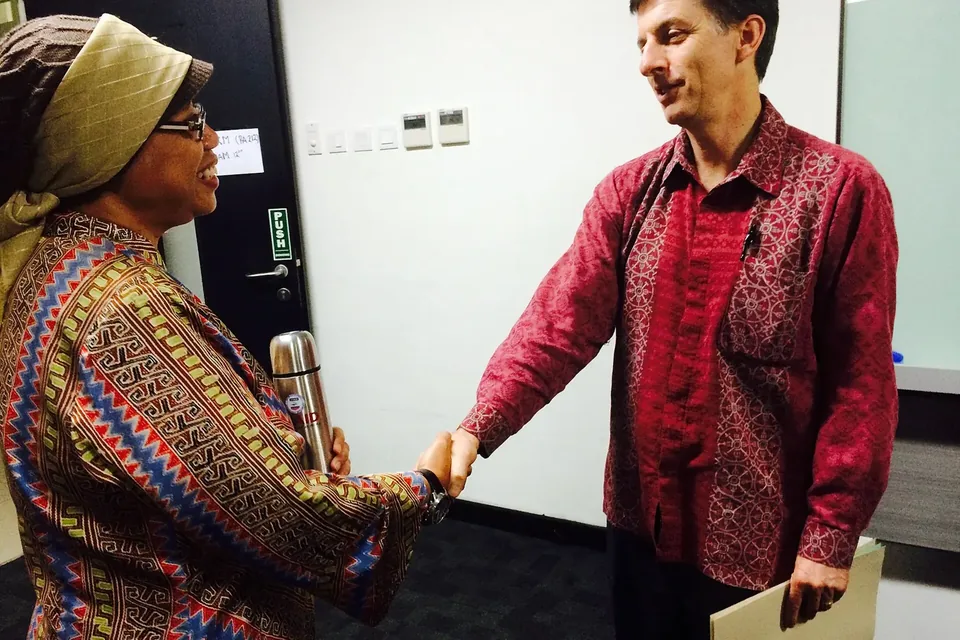
For more than seventy years, governments and foundations have paid universities in one country to work with universities in another, on the theory that a stronger university produces the doctors, engineers, agronomists and teachers a country needs. The results have ranged from institutions that still thrive today to projects that disappeared with their last grant. This guide explains how these partnerships work and what the record shows.
What counts as a "partnership for development"
The phrase covers several quite different arrangements. In a capacity-building partnership, the aim is to strengthen the partner institution itself: new departments, revised curricula, faculty members trained to master's or doctoral level, better laboratories or libraries, and improved management. In a research partnership, scientists from both sides work on a shared problem, such as a crop disease, a water system or a public health question, and the partnership is judged by its findings and by the researchers it trains. In a service partnership, universities work together on something outside the campus: teacher training, agricultural extension, small business advice or community health.
Most real programmes mix the three. What distinguishes a development partnership from an ordinary exchange agreement is that it is tied to a development objective, usually defined by a funder, and that one side is expected to gain capacity rather than simply exchange students.
The early model: building universities from scratch
After the Second World War, the United States exported a particular idea of the university: the land-grant institution, which combines teaching, research and extension to farmers. Under President Truman's "Point Four" technical assistance programme, announced in his inaugural address of January 1949, and its successors, US universities were contracted to help build similar institutions abroad.
Two examples are well documented. In India, G. B. Pant University of Agriculture and Technology at Pantnagar, founded in 1960, is generally described as the country's first agricultural university on the land-grant model, developed with assistance from the University of Illinois; several other Indian state agricultural universities were paired with US land-grant universities in the same period. In Ethiopia, what is now Haramaya University began in the 1950s as an agricultural college established with support from Oklahoma State University under the Point Four programme. Both institutions still exist and are run and funded by their own countries, which is the clearest measure of success such a partnership can have.
The main funding models
| Model | Who pays | Typical shape |
|---|---|---|
| US cooperative agreements and grants | USAID (until 2025), sometimes with other agencies | A US university and a partner institution work to an agreed results framework over three to five years |
| Title XII research programmes | USAID, under Title XII of the Foreign Assistance Act (1975) | Long-running research consortia led by US universities, later branded Feed the Future Innovation Labs |
| Research-for-development competitions | USAID with the National Academies (PEER, from 2011) | Grants to researchers in developing countries who collaborate with US federally funded scientists |
| Erasmus+ Capacity Building in Higher Education | European Union | Consortia of European and partner-country universities modernise curricula and governance |
| Research funds with a development remit | UK government (Global Challenges Research Fund, from 2016) | Research projects led by UK institutions with partners in eligible countries |
In the United States, one long-running intermediary was the Association Liaison Office for University Cooperation in Development, created in 1992 by six national higher education associations and later renamed Higher Education for Development (HED). Managed by the American Council on Education and funded by USAID, it ran competitions that matched US colleges and universities with institutions in Africa, Asia, Latin America and the Middle East. In 2012 USAID also launched the Higher Education Solutions Network, which funded development labs at seven universities: six in the US and Makerere University in Uganda.
What partnerships tended to achieve
Public evaluations of these programmes, many of them archived by USAID's Development Experience Clearinghouse, report similar kinds of results. Faculty members earned higher degrees, often partly at the US or European partner. New degree programmes and course materials were introduced. Laboratories, libraries and research stations were equipped. Joint research produced publications and, in agriculture, new crop varieties and practices. Some partnerships also changed how a university related to its community, through extension, clinics or links with employers. Business schools were a frequent case: see how partnerships worked to align business education with employers' needs.
It is harder to show effects beyond the university, such as higher farm incomes or better health outcomes, because many other factors are involved and few programmes were designed to measure them. Our guide to evaluating a university partnership explains why, and what good evaluation looks like.
Why many partnerships faded
The most common weakness is sustainability. When a grant pays salaries, scholarships or running costs that the partner institution cannot take over, activity tends to stop when the grant ends. Other recurring problems include goals set by the funder rather than the partner, short project cycles that do not match the time it takes to train a PhD, trained staff leaving for better-paid jobs elsewhere (see brain drain and brain circulation), and partnerships that depend on one enthusiastic individual on each side.
The 2025 dismantling of USAID added a new, abrupt cause. In March 2025 the US Secretary of State announced that most USAID programmes had been terminated, and on 1 July 2025 the State Department took over the remaining foreign assistance functions. Many university partnerships funded through USAID were ended before their planned completion. Our article on the history of US aid to higher education places that break in context.
Signs of a partnership that lasts
- Goals written jointly, and owned by the partner institution's leadership.
- A plan, from the start, for which costs the partner will carry after the grant.
- Investment in people (degrees, mentoring, research grants) as much as in buildings.
- Several links between the institutions, not just one project team.
- Results published and shared with both institutions' communities.
Sources
- USAID Development Experience Clearinghouse (archived project evaluations): dec.usaid.gov.
- US Department of State, foreign assistance: state.gov; spending data: ForeignAssistance.gov.
- Truman Library, inaugural address of 20 January 1949: trumanlibrary.gov.
- G. B. Pant University of Agriculture and Technology: gbpuat.ac.in; Haramaya University: haramaya.edu.et.
- European Commission, Erasmus+ Capacity Building in Higher Education: erasmus-plus.ec.europa.eu.
- National Academies, PEER programme: nationalacademies.org.
- American Council on Education: acenet.edu.
 Partnerships
How to evaluate a university partnership
The six OECD criteria, a results chain, indicators that mean something and the traps that make partnership reports look better than they are.
 Partnerships
US aid to higher education, 1949–2025
Land-grant ideas, Point Four, Title XII and the end of USAID in 2025: a dated history of US support for universities abroad.
 Partnerships
Agricultural university partnerships
Land-grant colleges abroad, Title XII consortia and Innovation Labs: why farming has been the heart of university partnerships.