Agricultural University Partnerships: From Land-Grant Colleges Abroad to Innovation Labs
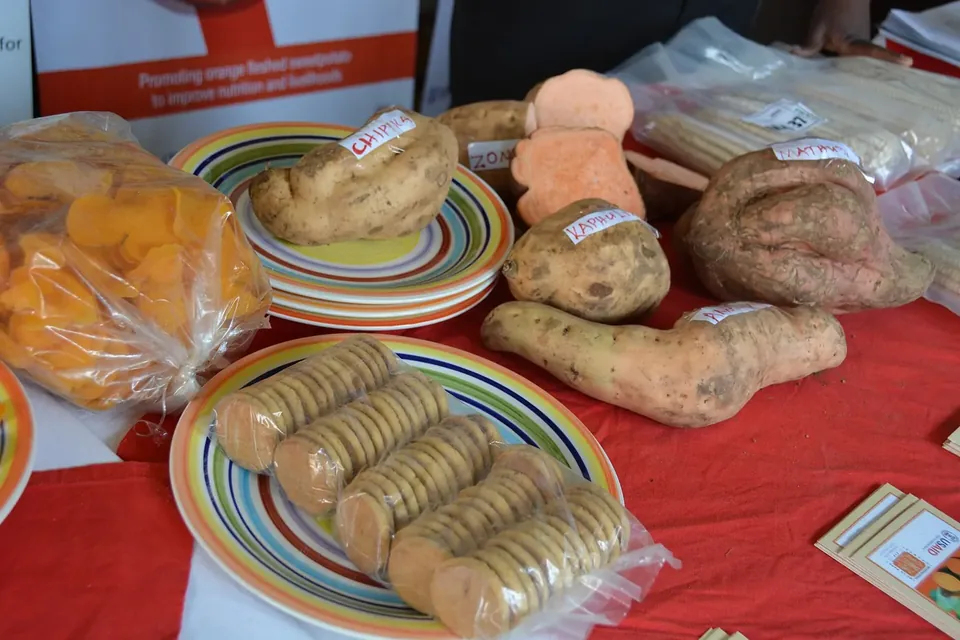
If one field defines university partnerships for development, it is agriculture. Most of the world's poorest households still depend on farming, agricultural research has an unusually direct path to people's incomes, and the land-grant model that US universities exported was built around it. This guide follows that thread from the 1950s to the research networks of the 2020s.
Why agriculture
According to the World Bank, agriculture is still a major source of livelihoods in low-income countries, and growth in agriculture has been found to reduce poverty more than growth in other sectors in the poorest countries. A university that trains agronomists, breeds locally adapted varieties and advises farmers can therefore have an effect well beyond its campus. There was also a strong supply side: US land-grant universities had decades of experience in exactly this combination of teaching, research and extension, and were willing to send faculty abroad.
Building colleges on the land-grant model
From the 1950s, under Point Four and then USAID, US universities helped establish agricultural colleges and universities in many countries. Well-known examples include the agricultural college that became Haramaya University in Ethiopia, assisted by Oklahoma State University, and India's state agricultural universities, beginning with G. B. Pant University at Pantnagar in 1960, assisted by the University of Illinois and other land-grant institutions. Typical work included designing degree programmes, training local staff, often through doctorates at the US partner, setting up experiment farms and creating extension services. Our history of US aid to higher education covers this period in more detail.
The Green Revolution and international research centres
In parallel, foundations and governments created international agricultural research centres. The work of Norman Borlaug on high-yielding wheat in Mexico, recognised with the Nobel Peace Prize in 1970, and of the International Rice Research Institute in the Philippines, founded in 1960, led to the varieties at the heart of the Green Revolution in Asia. In 1971 these centres were brought together under the Consultative Group on International Agricultural Research, today known simply as CGIAR. National universities trained the scientists who adapted and spread these varieties, and many CGIAR research projects include university partners.
Title XII and the research consortia
The 1975 Title XII amendment, "Famine Prevention and Freedom from Hunger", gave US universities a formal role in USAID's agricultural programmes and created the Board for International Food and Agricultural Development (BIFAD) to advise the agency. Title XII led to Collaborative Research Support Programs: multi-year consortia, each led by a US university, that worked with partner institutions on a crop, livestock or resource problem, and trained graduate students from partner countries.
Feed the Future Innovation Labs
Feed the Future, the US government's global food security initiative launched in 2010, reorganised these consortia as Innovation Labs. Each lab was led by a US university and worked with research institutions in partner countries. The table gives examples of labs and the universities that led them, as listed on their own websites before 2025.
| Innovation Lab (examples) | Lead university | Focus |
|---|---|---|
| Peanut | University of Georgia | Groundnut productivity, aflatoxin, nutrition |
| Collaborative Research on Sorghum and Millet | Kansas State University | Drought-tolerant cereals |
| Livestock Systems | University of Florida | Animal-source foods and livestock health |
| Horticulture | University of California, Davis | Fruit and vegetable value chains |
| Food Safety | Purdue University and Cornell University | Safer food systems |
The 2025 termination of most USAID programmes hit this network hard. Some labs lost their funding before planned completion; others continued with reduced scope or new funders. Check each lab's own website for its current status rather than relying on older lists.
Extension: the part that reaches farmers
Research only changes livelihoods when farmers can use it. Many partnerships therefore worked on extension: training extension officers, testing farmer field schools, using radio and mobile phones, and building links between universities and national extension services. The Food and Agriculture Organization has published widely on extension and advisory services, and stresses that extension works best when it responds to farmers' own questions rather than only passing messages down from researchers.
What made agricultural partnerships last
- Long horizons. Breeding a variety or training a cohort of PhDs takes a decade; the most successful programmes ran for many years.
- Local leadership. Partner-country scientists set research questions and led projects, rather than hosting visiting teams.
- Training as a core output. Graduate students from partner countries often became the next generation of research leaders.
- A path to farmers. Links with extension services, seed systems and markets turned results into practice.
- National funding. Institutions whose governments took over salaries and running costs survived the end of outside support.
For the general framework used to judge these programmes, see how to evaluate a university partnership.
African networks today
Agricultural universities in Africa increasingly work together. The Regional Universities Forum for Capacity Building in Agriculture (RUFORUM), founded in 2004 and based in Kampala, links dozens of member universities across the continent for graduate training, research grants and policy work, and several of the World Bank-financed Africa Centers of Excellence focus on agriculture.
Sources
- World Bank, Agriculture and food overview.
- CGIAR: cgiar.org; International Rice Research Institute: irri.org.
- Nobel Prize, Norman Borlaug, Peace Prize 1970.
- Food and Agriculture Organization: fao.org.
- Association of Public and Land-grant Universities: aplu.org.
- Innovation Lab websites, for example the Peanut Innovation Lab and the Sorghum and Millet Innovation Lab.
 Partnerships
US aid to higher education, 1949–2025
Land-grant ideas, Point Four, Title XII and the end of USAID in 2025: a dated history of US support for universities abroad.
 Partnerships
What university partnerships for development built
From India's first agricultural university to today's research networks: how cross-border university partnerships work, and what tends to last.
 Partnerships
Fair research collaboration across borders
Agreements, authorship, data, samples and ethics: how to set up a cross-border research partnership that is fair to both sides.