US Student Visas Explained: F-1, J-1 and M-1, Step by Step
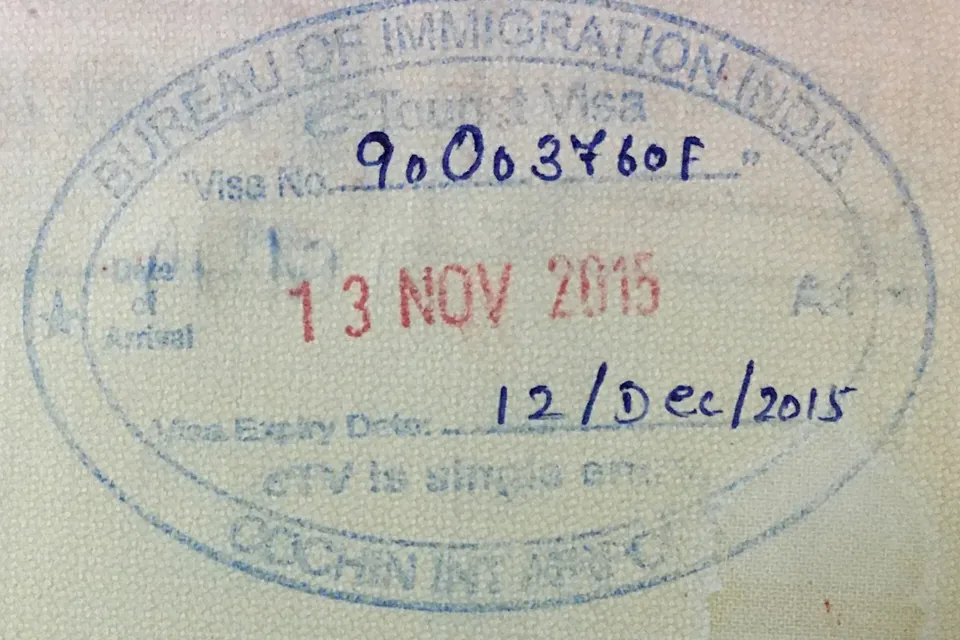
More than a million international students were enrolled at US colleges and universities in 2023/24 (1,126,690) and again in 2024/25 (about 1.2 million), according to the Open Doors reports of the Institute of International Education. Almost all of them needed a student visa. The process is the same in outline everywhere, but rules and fees change, and 2025 and 2026 brought several. This guide follows the official sources step by step.
Which visa?
| Visa | For | Document from the school or sponsor |
|---|---|---|
| F-1 | Full-time academic study: university, college, high school, language programme | Form I-20 |
| M-1 | Full-time vocational or non-academic study | Form I-20 |
| J-1 | Exchange visitor programmes: sponsored students, researchers, professors, trainees | Form DS-2019 |
Most degree students who pay their own way or hold university scholarships use the F-1. Students funded by their government, the US government (for example the Fulbright Program) or an exchange agreement often use the J-1, which can carry a two-year home-country physical presence requirement after the programme.
Step by step
- Get admitted to a certified school. Only schools certified by the Student and Exchange Visitor Program (SEVP) can issue an I-20. You can check a school on the Study in the States website run by the Department of Homeland Security.
- Receive your I-20 or DS-2019. The school or sponsor creates your record in SEVIS, the government database, and sends you the form. You will usually have to show you can pay for at least the first year.
- Pay the SEVIS I-901 fee. It is $350 for F and M students and $220 for most J exchange visitors, paid online at fmjfee.com. Keep the receipt.
- Complete the DS-160. This is the online nonimmigrant visa application. Upload a photo that meets the rules and print the confirmation page.
- Pay the visa application fee and book the interview. The application (MRV) fee for student visas is $185. Each embassy or consulate explains how to pay and schedule.
- Attend the interview. Bring your passport, DS-160 confirmation, I-20 or DS-2019, fee receipts, financial evidence and academic records. The officer will want to understand your study plans, how you will pay, and, for F and M visas, your intention to leave the US after your studies.
Timing rules
- Student visas can be issued up to 365 days before the start date on your I-20 or DS-2019.
- You may enter the United States no more than 30 days before that start date.
- Arrange at least temporary accommodation before you travel: you will need a US address for your arrival records and your school, and our guide to finding housing near your new campus explains how to do it from abroad.
- Appointment waiting times vary widely by consulate and season; the State Department publishes estimated wait times online. Apply as early as you can.
What changed in 2025 and 2026
Several changes announced by the State Department and the Department of Homeland Security in 2025 and 2026 affect students. Because some were still being implemented or challenged, confirm the current position on travel.state.gov before you apply.
- Online presence review. From 18 June 2025, F, M and J applicants were asked to set their social media profiles to public so that consular officers could review them.
- Interviews. From 2 September 2025, the State Department ended interview waivers for most applicants, including students, so an in-person interview is now the norm; it also asked applicants to apply in their country of nationality or residence.
- Travel restrictions. A presidential proclamation of June 2025 fully or partially suspended entry for nationals of a list of countries, with consequences for students from those countries.
- Visa integrity fee. Legislation passed in July 2025 created a "visa integrity fee" of at least $250 for most nonimmigrant visas, payable at issuance on top of the $185 application fee. In early 2026 the State Department had not yet started collecting it; check the fees page for its current status.
- End of "duration of status". DHS published a final rule on 17 July 2026, scheduled to take effect on 15 September 2026, that admits F and J students for a fixed period (generally the length of the programme on the I-20 or DS-2019, and no more than four years at a time) instead of "duration of status". Students who need more time must request an extension of stay.
Keeping your status
Once you arrive, your status depends on following the rules, not only on the visa in your passport. F-1 students must enrol full time, make normal progress, keep their I-20 valid, report changes of address and programme through their school's designated school official (DSO), and work only as permitted (see working while studying). Under the long-standing rules, F-1 students had a 60-day grace period after completing a programme and J-1 exchange visitors 30 days; the 2026 fixed-admission rule changes how these periods work, so confirm your dates with your DSO.
Avoid visa scams
- Pay US government fees only through the official channels listed on travel.state.gov and fmjfee.com.
- No agent can guarantee a visa, and no one can buy you an earlier appointment outside the official system.
- Your school's international office and EducationUSA advisers give free, official guidance.
If your visa is refused
Consular officers must explain the legal basis of a refusal. The most common for students is section 214(b) of the Immigration and Nationality Act, which means the officer was not convinced that you qualify for the visa, for example that you intend to return home after your studies or that you have enough funding. A refusal under 214(b) is not permanent: you can apply again, with a new fee, but it is only worth doing if your circumstances or the evidence you can present have changed. A refusal under section 221(g) means the application is incomplete or needs administrative processing; the officer will tell you what is missing. Tell your school's international office about any refusal or delay, as it may be able to defer your start date or update your I-20.
Sources
- US Department of State, Student visa and visa fees.
- Department of Homeland Security, Study in the States; SEVIS I-901 fee.
- US Immigration and Customs Enforcement, SEVP.
- EducationUSA: educationusa.state.gov.
- Institute of International Education, Open Doors.
 Study abroad
The real cost of studying abroad
Tuition, living costs, health charges and the proof-of-funds figures visa officers use, country by country, with dated official sources.
 Study abroad
Working while studying abroad
Hour limits, on- and off-campus rules and post-study work routes in six countries, from the immigration authorities' own pages.
 Study abroad
Finding housing near your new campus
Neighbourhoods, residences or private rentals, deadlines, deposits, documents and scam warnings: how to find a place to live before you fly.