Higher Education in Africa: Access, Growth and the Partnerships Shaping It
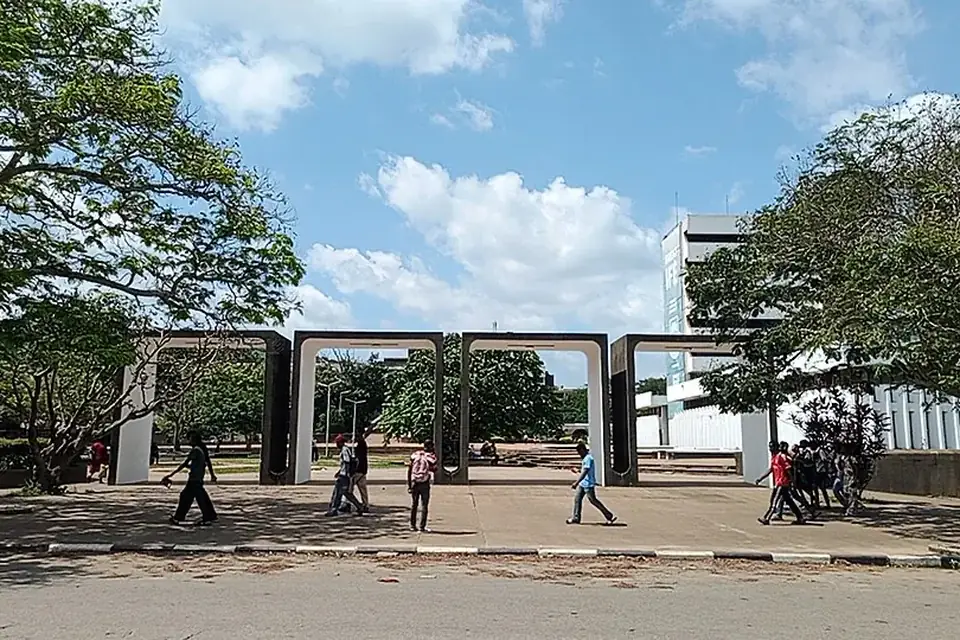
Sub-Saharan Africa has the youngest population in the world and the lowest participation in higher education. Enrolment has grown fast, but universities struggle to keep up with demand, funding and the need for research. This article looks at what the data show and at the continental and international initiatives trying to change the picture.
Access: the lowest rate, the fastest growth
The gross enrolment ratio (GER) measures the number of students enrolled in tertiary education as a share of the population of the corresponding age group, usually the five years after secondary school. According to UNESCO's 2022 overview of higher education, based on data from the UNESCO Institute for Statistics, the global GER reached about 40% in 2020, while sub-Saharan Africa's stood at about 9%, the lowest of any region. Rates vary widely between countries, from very low levels in several Sahel countries to much higher levels in Mauritius and parts of North and Southern Africa.
At the same time, absolute numbers have grown rapidly. The United Nations' World Population Prospects project that Africa will account for a large share of the growth in the world's young population in the coming decades. More young people finishing secondary school means more demand for university places than public systems can fund.
The main constraints
| Constraint | What it means in practice |
|---|---|
| Funding | Public spending per student has often fallen as enrolment rose; fees and private institutions have filled part of the gap |
| Academic staff | Large classes, and a limited share of lecturers holding doctorates in many systems |
| Research capacity | Africa produces a small share of global research output relative to its population |
| Equity | Lower participation among women in many countries, and among rural and poorer students |
| Relevance | Concerns about graduate unemployment and the match between programmes and labour markets |
The World Bank's work on tertiary education highlights these issues and argues that investment in higher education and research is necessary alongside basic education, a shift from the 1980s and 1990s, when many donors prioritised primary schooling.
A long history of institutions
Africa's universities are not new. Al-Qarawiyyin in Fez and Al-Azhar in Cairo are among the oldest continuously operating centres of learning in the world. In sub-Saharan Africa, colonial-era colleges such as Makerere in Uganda (founded 1922) and Ibadan in Nigeria (1948) became flagship national universities after independence. The Association of African Universities, founded in 1967 and based in Accra, links institutions across the continent.
Continental initiatives
- The African Union's Continental Education Strategy for Africa 2016–2025 (CESA 16-25) set objectives for higher education, research and quality, as part of the AU's longer-term Agenda 2063.
- The Pan African University, established by the African Union in 2011, has institutes hosted by universities in different regions of the continent, offering postgraduate training in fields such as science, technology, governance and water and energy.
- The Africa Centers of Excellence programmes, financed by the World Bank from 2014 with African governments, fund selected university centres to train postgraduate students and do applied research in priority fields, with payments linked to results.
- Quality assurance frameworks such as the African Standards and Guidelines for Quality Assurance in Higher Education, discussed in our quality assurance article, aim to make qualifications more comparable across the continent.
The role of international partners
International partnerships, described in our article on university partnerships for development, have supported doctoral training, research and new programmes in many African universities. Large scholarship schemes, such as the Mastercard Foundation Scholars Program and government programmes from Europe, North America and Asia, have funded study both within Africa and abroad. The 2025 end of most USAID programmes removed one significant source of support for some partnerships; European, African and philanthropic funders remain active, and several have emphasised building capacity within African institutions rather than funding study abroad.
Women and equity
Sub-Saharan Africa is the main region where women remain fewer than men in tertiary education. Our article on women in higher education looks at the barriers and at what programmes have done.
What to watch
Indicators that will show progress
- Gross enrolment ratios, overall and by sex, in UIS data.
- The share of academic staff holding doctorates.
- Research output and the share led by African-based authors.
- Public spending per tertiary student.
- Graduate employment rates, where countries publish them.
Private universities and digital learning
Unable to fund enough places, many African governments have licensed private universities, which now enrol a large share of students in several countries. Some are well-established non-profit or faith-based institutions; others are small and of uneven quality, which is why national accreditation bodies matter. Digital and distance learning expanded quickly during the COVID-19 pandemic, and open universities, such as the National Open University of Nigeria and the University of South Africa (UNISA), founded in 1873 and one of the oldest distance-teaching universities, enrol large numbers of students. Connectivity and the cost of data remain obstacles for many learners, and regulators are still developing rules for recognising online degrees.
Sources
- UNESCO Institute for Statistics: uis.unesco.org; UNESCO IESALC, Higher education figures at a glance (2022): iesalc.unesco.org.
- United Nations, World Population Prospects.
- World Bank, tertiary education; Africa Centers of Excellence.
- African Union, Agenda 2063; Pan African University.
- Association of African Universities: aau.org.
 Partnerships
Women in higher education
Women now outnumber men at university in most regions, but not in science, research or leadership. What the data and programmes show.
 Partnerships
What university partnerships for development built
From India's first agricultural university to today's research networks: how cross-border university partnerships work, and what tends to last.
 Trends & data
International student numbers
Global totals, the top destinations, India overtaking China in the US, and the new caps in Canada, Australia and the UK.